
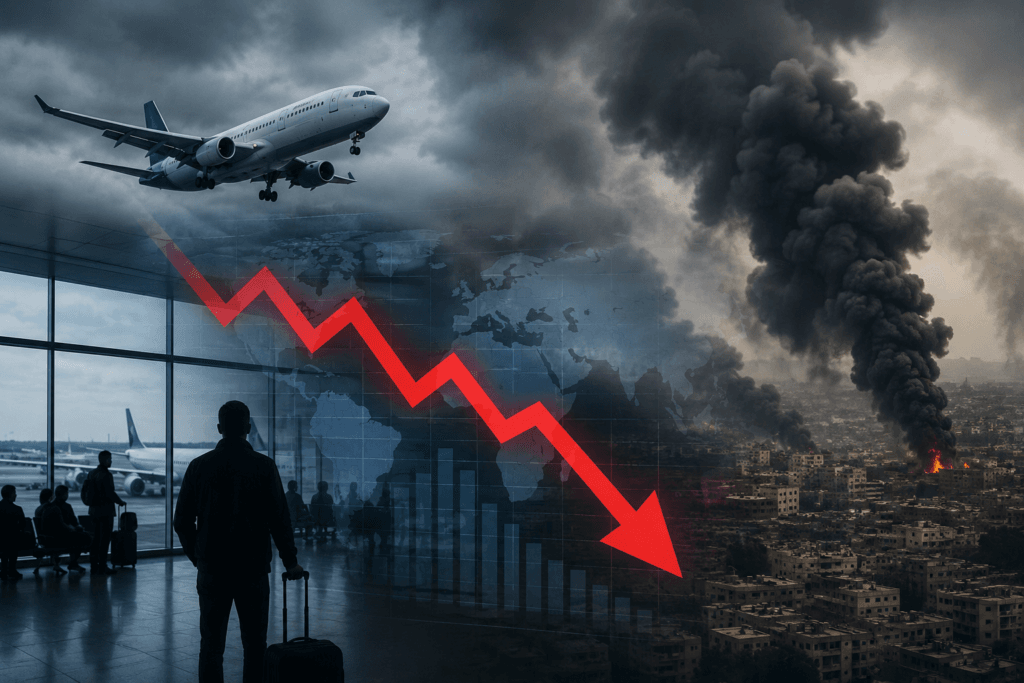
The International Air Transport Association (IATA) has reported a 3.4% year-on-year decline in global passenger demand for April 2026, highlighting the significant impact of the ongoing Middle East conflict on international aviation and airline operations.
According to IATA, the sharp fall in demand from Middle Eastern carriers heavily affected overall global air traffic performance despite growth across several international markets outside the region. Total passenger demand, measured in revenue passenger kilometers (RPK), declined 3.4% compared to April 2025, while total airline capacity dropped 2.9%. Global load factor stood at 83.1%, slightly down from the previous year.
Middle Eastern Airlines Record Sharpest Decline
IATA stated that carriers in the Middle East experienced the steepest decline globally as geopolitical tensions and ongoing conflict disrupted travel demand, flight operations, and regional connectivity.
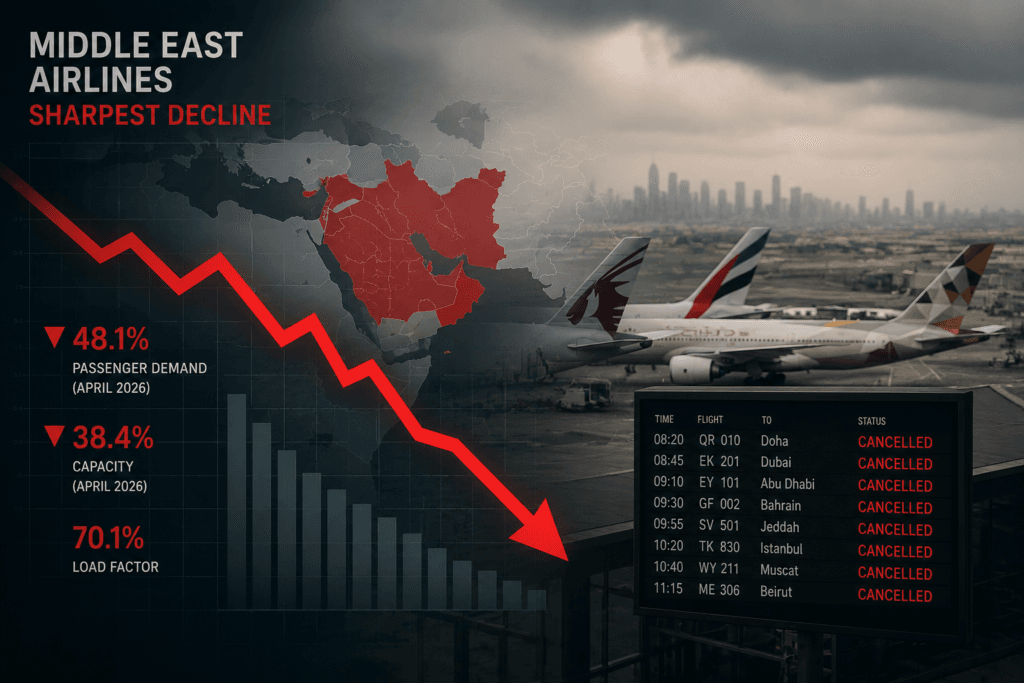
Middle Eastern airlines recorded a 48.1% year-on-year decline in international passenger demand during April 2026, while capacity fell 38.4%. The region’s load factor also dropped significantly to 70.1%.
IATA Director General Willie Walsh noted that the impact of the conflict was severe enough to drag overall global demand into negative territory.
The association also warned that rising jet fuel prices continue to place additional pressure on airlines and passengers worldwide. Jet fuel costs reportedly more than doubled during April, contributing to higher airfares and reduced flight schedules across several markets.
International Travel Markets Show Mixed Performance
Despite the decline in the Middle East, several global regions continued to post positive international traffic growth during April 2026.
Asia Pacific airlines reported a 3.0% increase in international demand, supported by continued recovery in regional travel markets. European carriers also recorded modest growth of 0.9%, while Latin American airlines achieved strong growth of 8.9% year-on-year.
IATA noted that direct traffic between Europe and Asia increased significantly as some travelers avoided routes transiting through Middle Eastern hubs due to security concerns and operational disruptions.
Meanwhile, North American carriers reported flat international demand, reflecting broader uncertainty in the global aviation sector.
Rising Fuel Costs and Capacity Cuts Impact Airlines
The ongoing geopolitical situation has also created additional operational challenges for airlines globally, particularly due to increasing fuel costs and disruptions to air cargo and transit routes.
Industry analysts have warned that the conflict is affecting both passenger travel and global supply chains, with several airlines reducing flight schedules to balance weaker demand and higher operating expenses.
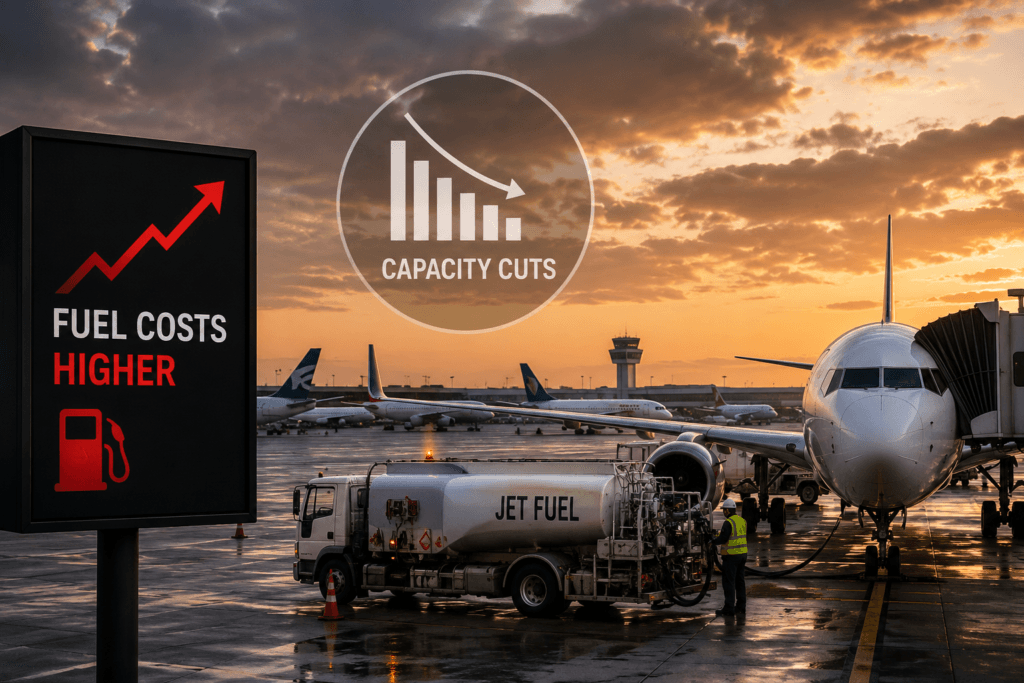
Airports and airlines in Europe and Asia are also seeing route adjustments as travelers increasingly choose alternative transit hubs outside the Middle East. Heathrow Airport recently reported weaker passenger numbers linked to reduced international travel demand amid the ongoing regional conflict.
Impact on Travel Retail and Airport Spending
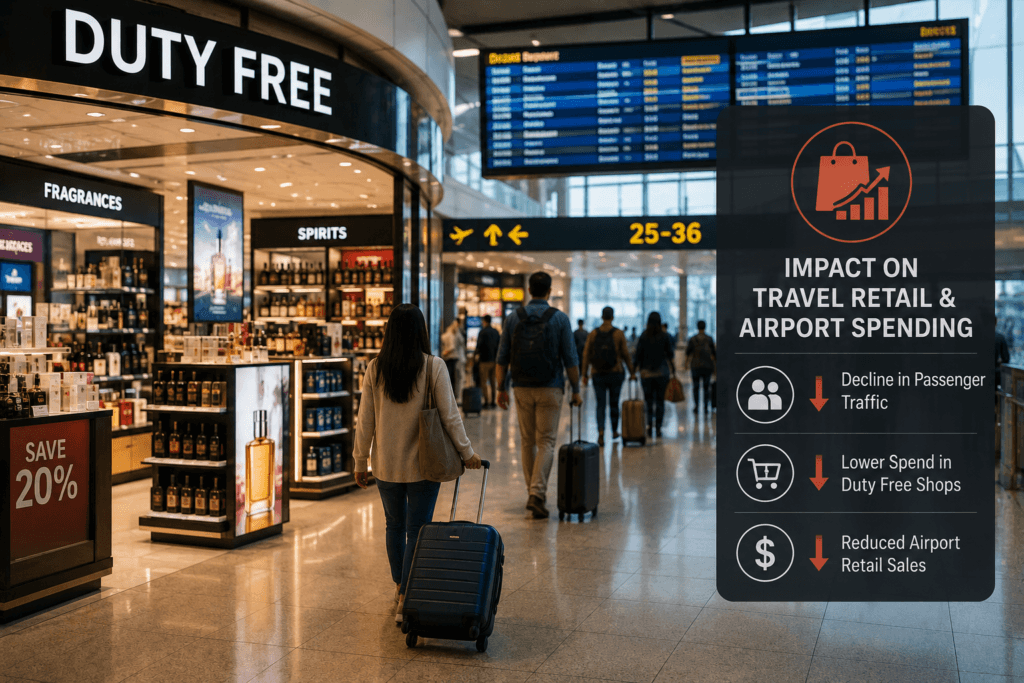
The slowdown in global passenger traffic is expected to have a direct impact on travel retail, airport shopping, and duty free sales, particularly in major Middle Eastern aviation hubs such as Dubai and Doha.
Travel retail operators are closely monitoring passenger trends as reduced international traffic and higher ticket prices could affect discretionary spending at airports worldwide.
However, industry experts believe that continued growth in Asia Pacific and Latin American travel markets may help offset part of the decline in Middle Eastern passenger volumes over the coming months.
Outlook for Global Aviation
IATA described the current aviation environment as highly volatile, with airlines continuing to adjust schedules and operational strategies in response to changing market conditions.
While the global aviation industry remains under pressure from geopolitical uncertainty and fuel price volatility, demand outside the Middle East continues to show resilience across several international travel corridors.