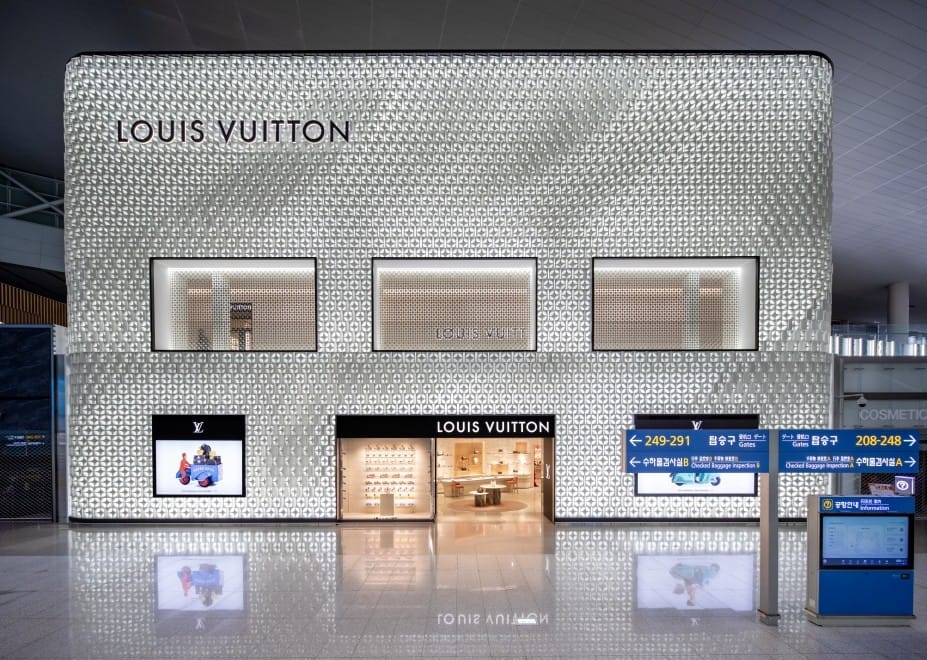
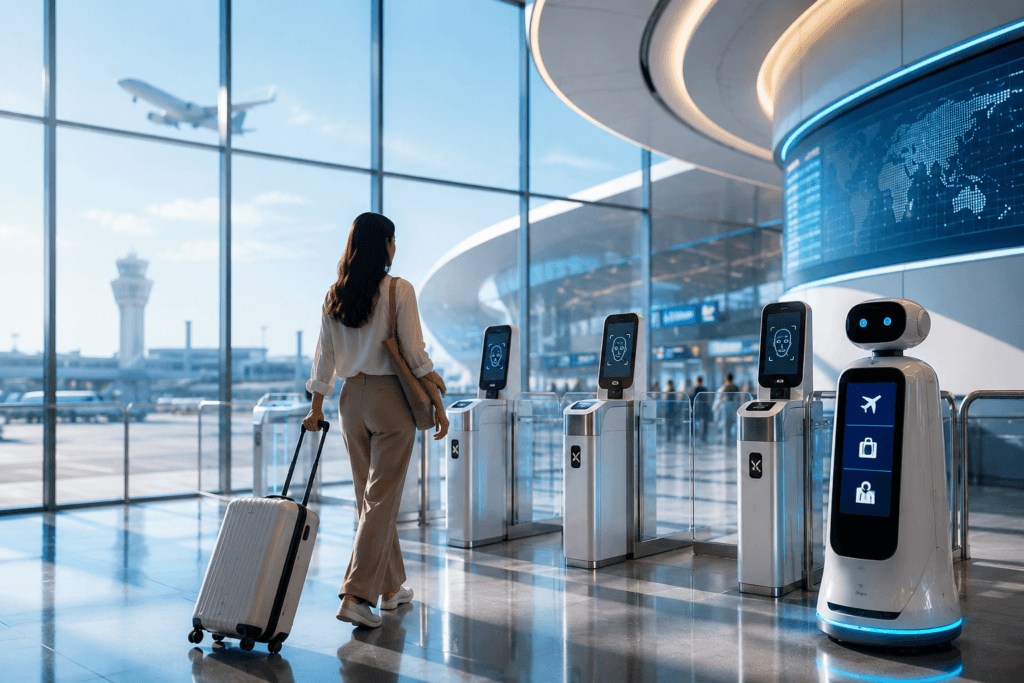
The airport terminal has always been a mirror of its era — a place where technology, commerce, and human movement converge. But the pace of transformation accelerating through 2025 and 2026 is unlike anything the travel retail world has seen before. Biometric gates are replacing paper boarding passes, artificial intelligence is predicting passenger needs before they arise, and duty-free shopping is going digital before travellers even reach the gate. For those working in travel retail and airport concessions, understanding these shifts is no longer optional — it is essential.
Global investment signals just how seriously the industry is taking this moment. The global airport construction market is projected to reach approximately $1.25 trillion in 2026 — a $40 billion jump from the previous year — with terminal upgrades accounting for a significant share of that spend. But the more telling shift is qualitative: airports are moving from an “expansion-first” mindset to an “optimisation-first” one, prioritising the quality of the passenger journey over the sheer addition of gates and square footage.
1. Biometric Technology: The End of the Paper Journey
No single technology is reshaping the airport experience more profoundly than biometrics. Facial recognition, fingerprint scanning, and iris detection are replacing the traditional passport-and-boarding-pass shuffle at nearly every touchpoint — from check-in and bag drop to security, lounge access, and gate boarding. According to the Coherent Market Insights Airport Biometric Service Market Report, the global airport biometric market is valued at $144.87 billion in 2026 and is forecast to reach $312.34 billion by 2033.
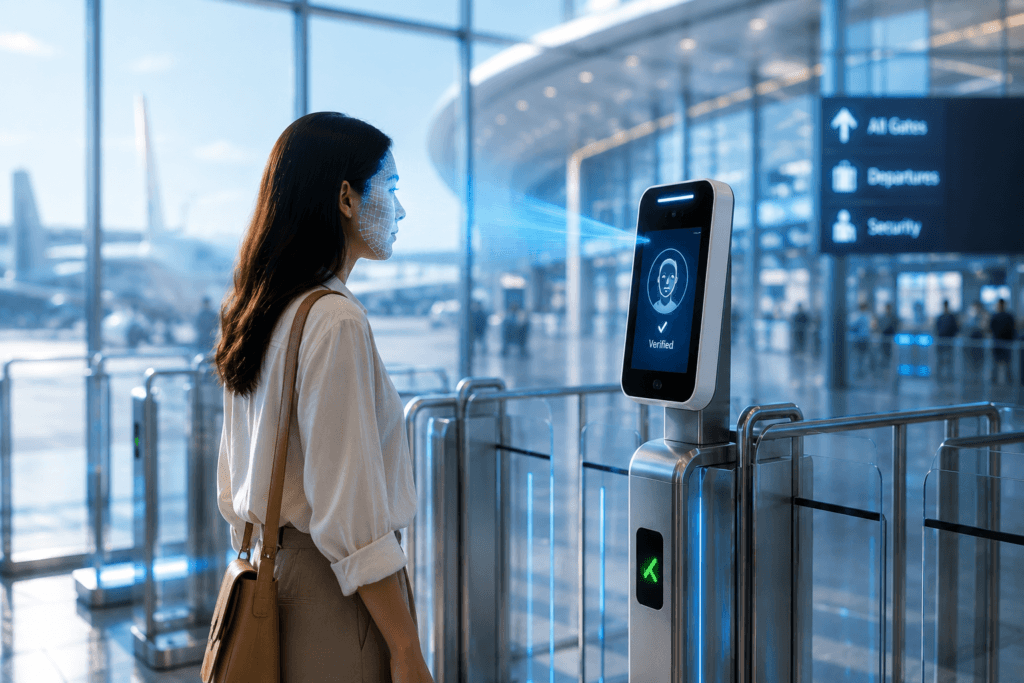
The numbers illustrate the scale of adoption. Facial recognition accounts for the largest single biometric modality at airports in 2026, commanding an estimated 45.4% market share — driven by its non-intrusive nature and speed. Automated biometric e-gates can process a passenger in just 10 to 15 seconds, compared to the 45 to 90 seconds required for a manual passport inspection. For a hub handling 50 million passengers annually, this difference translates to millions of staff-hours recovered and billions of dollars in economic productivity.
“The utopian world would be one where a single digital identity is recognised globally and allows the passenger full control over that identity – from check-in at their home airport to boarding a connecting flight on the other side of the world.”
Leading airports are already demonstrating what full biometric integration looks like in practice. Singapore Changi Airport is targeting 95% automated immigration processing by the end of 2026, allowing passengers to clear security in under ten seconds. Dubai International Airport’s biometric smart gates now verify travellers at security, immigration, and boarding without any manual checks. San Diego International Airport’s brand-new Terminal 1 features a full suite of SITA biometric face pods at every stage of the curb-to-gate journey.
For travel retail operators, the implications extend well beyond queuing. Biometric identity is now enabling frictionless lounge access and automated tax-free eligibility at duty-free counters — eliminating friction points that reduce the dwell time available for retail revenue. When a passenger no longer needs to present a passport to claim a VAT refund, they spend more time — and more money — at the counter.
Key Airports Leading Biometric Deployment
2. AI, IoT and the Smart Terminal Ecosystem
Biometrics is just one layer of a much broader digital transformation. Across the world’s leading airports, artificial intelligence, the Internet of Things, and 5G connectivity are being woven together to create what industry analysts call the “Airside 4.0” ecosystem — a terminal environment in which every system communicates, every data point is actionable, and the passenger experience is proactively managed rather than reactively repaired.
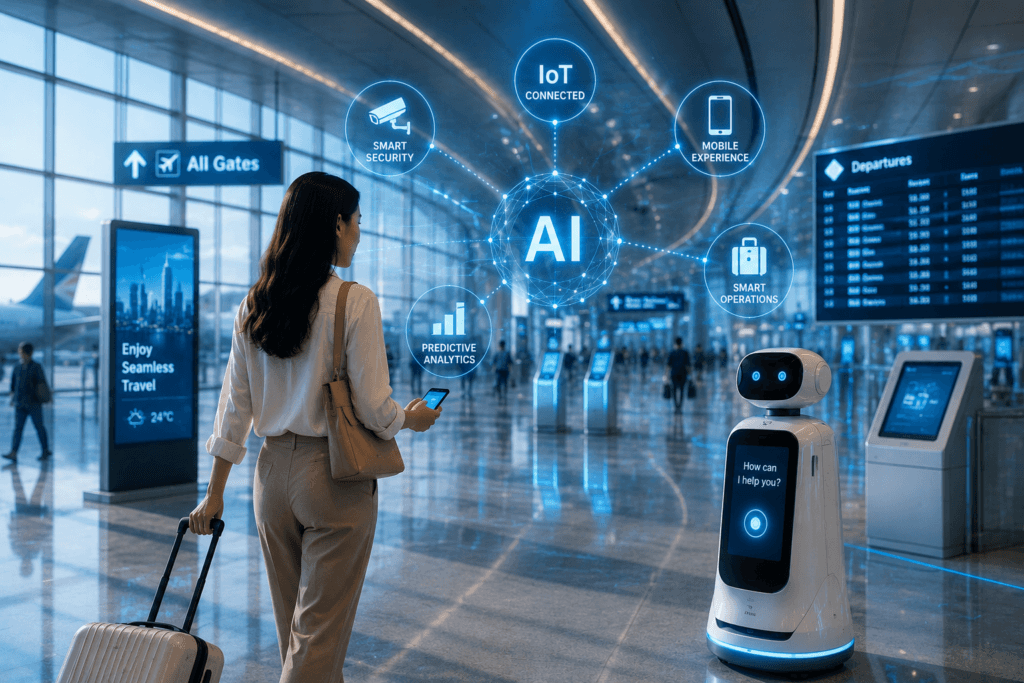
In practical terms, this means sensors embedded in terminal floors and ceilings that track crowd density in real time, enabling dynamic wayfinding displays to route passengers away from congestion before queues form. It means predictive baggage handling systems that flag anomalies hours before a flight. It means AI-driven retail analytics that identify which product categories are underperforming on a given day and adjust digital displays accordingly. According to SNS Insider’s Airport Terminal Operations Market Report, this market was valued at $8.06 billion in 2025 and is forecast to reach $18.27 billion by 2035, growing at a CAGR of 8.69%.
Indoor Wayfinding and Location Intelligence
For the passenger, one of the most tangible expressions of AI in the terminal is intelligent wayfinding. Hardware-free indoor positioning systems now allow airport apps to guide travellers turn-by-turn through complex multi-terminal environments, accounting for their specific gate, the current security wait time, and even their historical walking speed. For travel retailers, this same location intelligence enables hyper-targeted push notifications — a well-timed offer on a passenger’s favourite fragrance brand as they walk past a duty-free perfumery, for instance.
3. Robotics and Autonomous Service: From Novelty to Necessity
A few years ago, a robot gliding through an airport terminal was a curiosity — something to photograph and share. In 2026, it is increasingly a functional part of the operation. Autonomous robots capable of guiding passengers through complex terminals, answering queries in multiple languages, and transporting carry-on luggage are transitioning from controlled demonstrations to live operational pilots at airports across Asia, Europe, and North AmericThe commercial case is clear.
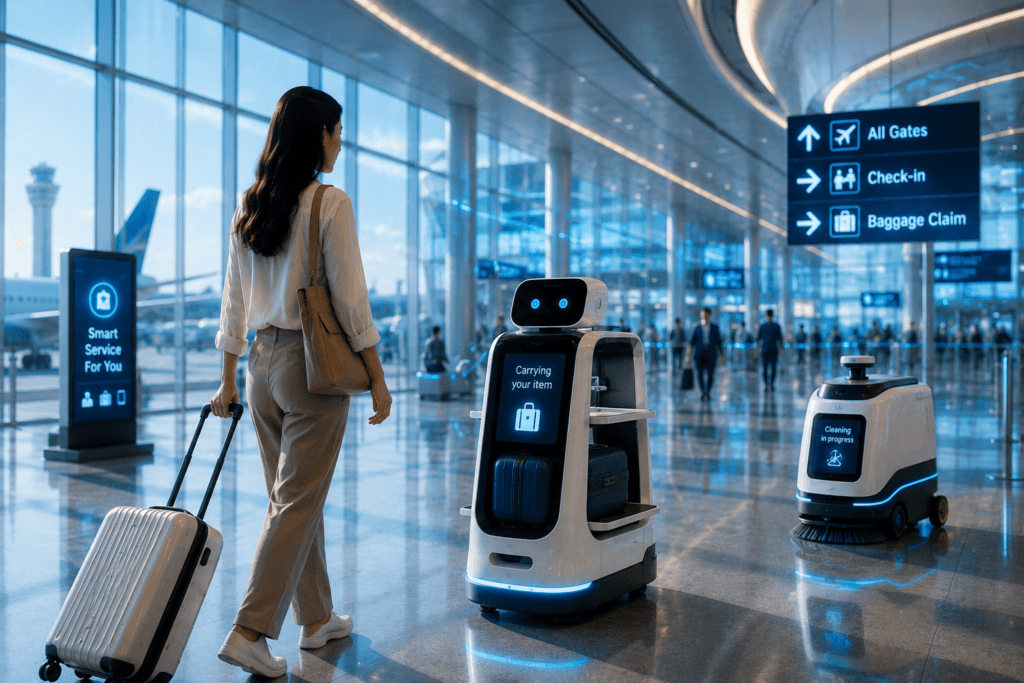
During peak periods — the early morning rush, a bank holiday weekend, or the height of summer — human staffing levels are consistently insufficient to meet passenger demand. Robots can supplement staff seamlessly, maintaining a consistent standard of service regardless of footfall. For duty-free operators managing large concourse spaces, autonomous cleaning and restocking units are also beginning to appear, reducing labour costs and ensuring shelves remain immaculate throughout the day.”CES 2026 made it clear this is no longer a distant dream — humanoid and service robots are on a defined trajectory from controlled demonstrations to operational pilots in environments where precision, safety, and reliability matter.”
4. The Digital Reinvention of Travel Retail
For the travel retail and duty-free industry specifically, perhaps the most commercially significant shift is the digitisation of the shopping journey itself. Passengers in 2026 expect the same level of digital convenience in airport retail as they enjoy from their favourite e-commerce platforms — and airports are rapidly responding.
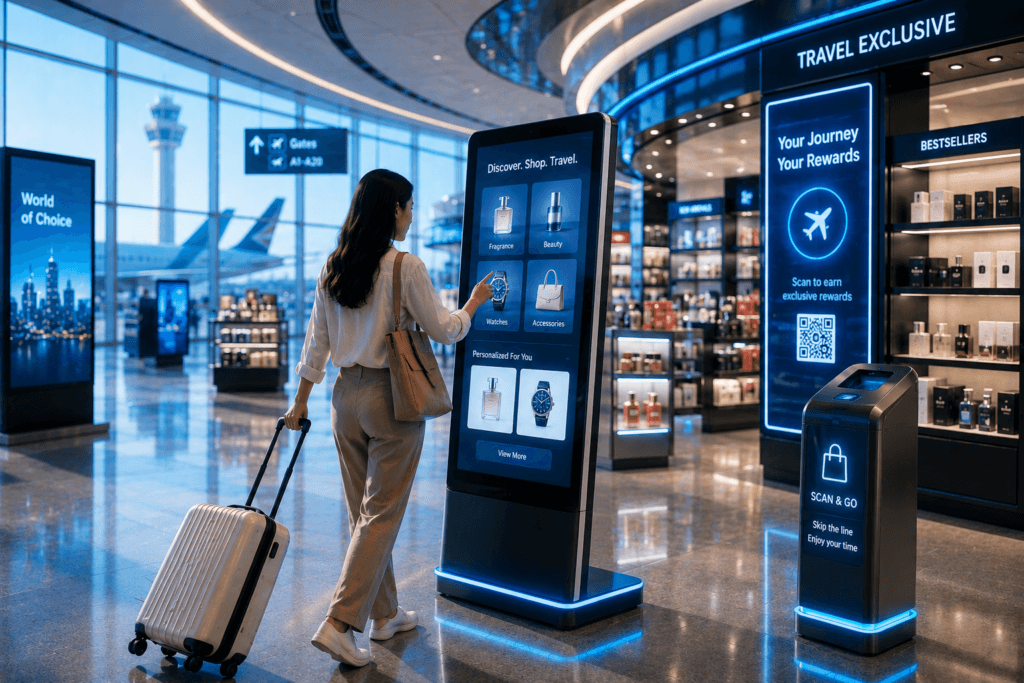
Mobile commerce integration is now a strategic priority for airports and concessionaires alike. According to International Airport Review, major operators are building platforms that allow travellers to pre-order duty-free goods, book dining slots, and access personalised offers via airport apps. Amsterdam Schiphol’s recently launched Today Duty Free concept — developed in collaboration with Lagardère Travel Retail — represents this shift in physical form: a flagship store designed around modern retail principles of discovery and personalisation rather than the traditional duty-free warehouse model.
The connection between biometric identity and retail personalisation is also deepening. When a frequent traveller passes through a biometric gate, their loyalty status, purchase history, and preferences can inform the digital displays they encounter at retail, the offers triggered on their phone, and the tax-free processing at checkout. The result is a seamless, highly personalised commercial experience that feels intuitive rather than transactional. This aligns with IATA’s One ID initiative, which is advancing a vision of a paperless journey where passengers control their own digital identity from check-in to boardingWhat Smart Retail Looks Like in Practi
What Smart Retail Looks Like in Practice
5. New Terminal Openings Setting the Standard
A handful of new terminal projects opening in 2026 are serving as physical embodiments of these technological ambitions. JFK’s Terminal 6 — opening this year with nine widebody-capable gates — has been designed from the ground up as a digital-first environment, featuring automated baggage systems, updated TSA screening technology, biometric-enabled self-service bag drops, and rooftop solar power.
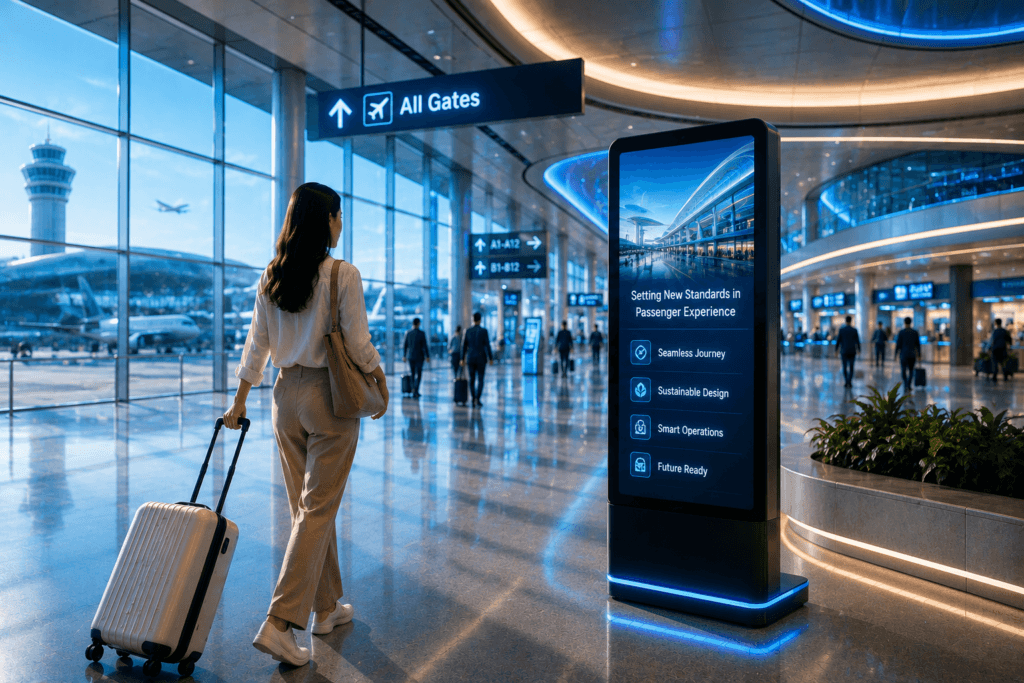
At JFK’s New Terminal One, the design philosophy is equally forward-looking. With 23 gates planned for full completion in 2030 and the first phase — including arrivals and departures halls — opening in 2026, every aspect of its design centres on smooth, efficient, and premium passenger processing. Munich Airport, meanwhile, is pairing a new pier with upgraded dining concepts and premium facilities for long-haul travellers, demonstrating that passenger experience improvements are as much about environment quality as processing speed.
6. Sustainability as a Passenger Experience Factor
It would be incomplete to discuss terminal technology in 2026 without acknowledging the role of sustainability. According to International Airport Review, 2026 marks a pivotal year for the sector’s sustainability and digital transformation — with renewable energy microgrids, IoT energy management, and sustainable aviation fuel infrastructure all being integrated into terminal designs.
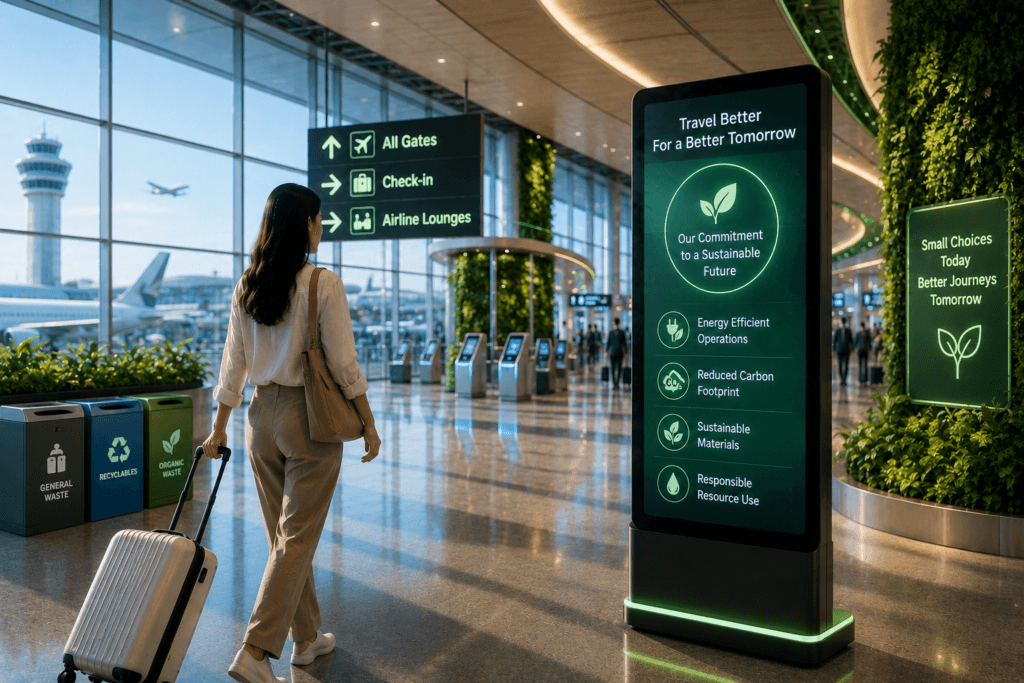
Passengers are beginning to factor environmental credentials into their perceptions of airport quality. An airport that can demonstrate measurably lower emissions per passenger earns a reputational premium that extends to the retail and F&B operators within it. For duty-free brands in particular, alignment with a terminal’s sustainability positioning can strengthen brand perception at a moment when consumers are highly receptive.
What This Means for Travel Retail
The transformation of the airport terminal is not simply a story about infrastructure or IT investment. It is a story about the passenger relationship — and the window of commercial opportunity that relationship represents. When friction is removed from every step of the airport journey, passengers arrive at the gate with more time, less stress, and greater openness to the retail and dining experiences around them.
For brands and operators in the travel retail space, the strategic imperative is clear: invest in the digital and experiential capabilities needed to meet passengers in this new environment. Whether that means integrating with an airport’s biometric identity platform, building a pre-order capability into your e-commerce stack, or reimagining your physical store layout for a technology-enabled customer — the terminal of 2026 rewards those who adapt.
The airports and retailers that will define the next decade of travel retail are not waiting for the future to arrive. They are building it, gate by gate and byte by byte, right now.